SPINE

Showing posts with label LGBT. Show all posts

Friday, September 6, 2013

Black lesbian


It's a good thing that there is a movie on the experience of a black lesbian. I'm so tired of seeing blacks, men or women, depicted only within the framework of poverty, class struggle and race.

I hear Pariah, a film that won critical accolades at the 2011 Sundance festival, is a saga of a black teen's tempestuous journey through sexual identity.

Pariah is written by precocious African American writer (who went into film writing after getting an MBA in finance), Dee Rees.

"I'm broken, but I am free," says the protagonist of Pariah.

Friday, June 28, 2013

(Se)same sex


A forthcoming New Yorker cover has Bert and Ernie curled up on a couch, watching the U.S. Supreme Court Justices. 

Lest people look askance at what could be perceived as sexualization of innocence, I'd like to put in my two cents by saying same-sex couples are not just about sex; love has infinite forms.

Thursday, June 27, 2013

Gay Britons


In light of the U.S. Supreme Court's decision to strike down DOMA (Defence of Marriage Act, passed in 1996), it can be said, unambiguously that same-sex love is no longer the Oscar Wildean love that "dare not speak its name."

It's easy to name Oscar Wilde in the same breath as gay-love. Wilde was a courageous spokesperson and carefree practitioner of an amor that risked social wrath and cruel punishment in his days.

What about the quieter Victorian/Edwardian male Britons who were not that courageous, but expressive nonetheless of social relations that were taboo?

Thinking of British novelist, E.M. Forster, made the image of his A Passage to India float up in my mind. That's the novel that Forster is known for in India, where I had my first brush with E,M. Forster.

It took me years to extract the homoerotic theme in A Passage: Who can not but see the deep mutual affection affection between the affable Fielding and the pansy, somewhat neurotic, Aziz? Fielding is a strapping British "lad," with a muscular mien, a no nonsensical approach to approach to living the life of an expatriate Briton in colonial India. Aziz is the fusspot male, very feminine, with a wife that's conveniently dead. 

They chalk up a great friendship that crosses racial and national bars; Fielding is one of the few British males in the novel who does not believe that Aziz molested Ms. Adela Quested. My belief is that Fielding knew of the love that dare not speak its name kind of love that flew through Aziz's vein.

Both Aziz and Fielding acted straight, but were gay.

Later, much later, I came to know that E.M. Forster himself was a homosexual. In denouncing his writing as mediocre, the mercurial Nobel Laureate V.S. Naipaul said that Forster wasn't a real writer on India, he merely traveled to India to find boys. Naipaul dismissed Forster as an opportunistic homosexual.

Forster's homosexuality made me re read the relationship between Fielding and Aziz in a fresh light. It also made me read his other novel Maurice.

Maurice is without pretence, about the love between two Englishmen in England.

The love in Maurice faces obstructions, but the novel has a happy ending.

Forster wrote about the happy ending:
A happy ending was imperative. I shouldn’t have bothered to write otherwise. I was determined that in fiction anyway two men should fall in love and remain in it for the ever and ever that fiction allows, and in this sense Maurice and Alec still roam the greenwood. I dedicated it ‘To a Happier Year’ and not altogether vainly. Happiness is its keynote.
Looking back at the ending of A Passage to India, I don't see a "happy ending." I see a parting between Fielding and Aziz, though they promise to meet again. But the meeting is also implied as impossible, perpetually deferred, as the following words echo through the crisp and cool North Indian air, "Not now, not now, not yet, not yet."

Perhaps it was easier for Forster to foresee a happy union between Maurice and Alec because both were not only gay men in love with each other, but also white British males. In A Passage, on the other hand, Fielding was a Britisher of the then-ruling class, and Aziz was an Indian, conceivable in the role of a subaltern not as an equal partner to Fielding.

Wednesday, March 27, 2013

What can be "newer" than technology?

Same-sex marriage, of course.

Or. at least according to Supreme Court justice Samuel Alito.

The U.S. Supreme Court is turning its attention to the merits of the case on Proposition 8, California's ban on same-sex marriage.

The justices, as exemplified by the words of Alito, are perplexed by what they have been asked to legally and humanely meditate on--the changing nature of the institution of marriage.

In the words of Alito:
Same-sex marriage is very new, [it] may turn out to be a good thing; it may turn out not to be a good thing. But you want us to step in and render a decision, based on an assessment of the effects of this institution, which is newer than cellphones or the Internet? I mean, we do not have the ability to see the future.

Saturday, March 2, 2013

Goldman (Same)Sex


A few years ago Llyod Blankenfein, CEO of Goldman Sachs, made a commercial in support of same-sex marriage.

At that time, Blankenfein said, he had the feeling that he was taking a timely stand on what many consider to be the era's most important civil rights issue in America. Blankenfein was surprised to find that he was a bit lonely out there at that time, but the "virus," as it were, of marriage equality spread and this week, Goldman Sachs was one of more than a 100 corporations that lodged their support for same-sex marriage in two briefs filed with the Supreme Court. 

Historically, corporate America has been a laggard in participation in civil rights movements. It doesn't want to get involved in politics for obvious reasons.

According to Gavin Wright, Professor of American economic history at Stanford University,
[Corporate America] supported a public accommodations law only after sit-ins and boycotts inflicted heavy losses and it became clear that these pressures were not going to fade away as the latest student fad. On employment, even leading textile firms resisted and dragged their feet, certainly not testifying in support of civil rights legislation. But that changed [...] when they found that desegregation actually worked.
Corporations avoided Equal Rights movement and decades ago showed little interest in the Women's Movement. While many companies have joined in Supreme Court briefs in recent years in support of Affirmative Action and diversity in workplaces, the participation came after a long time.

Corporate America no longer wants to lag behind as a socially and politically conscientious entity. 

The world has changed since the time of the preceding civil rights and image counts as does the intricate interconnection between being "good" and being "profitable," at least on the outside. 

"I think people wanted to attach themselves to what may be the last great civil rights issue of our time," remarked Blankenfein (after pocketing a record CEO package this year).

Thursday, January 31, 2013

Can lesbians be misogynists?

Can lesbians be misogynists? 

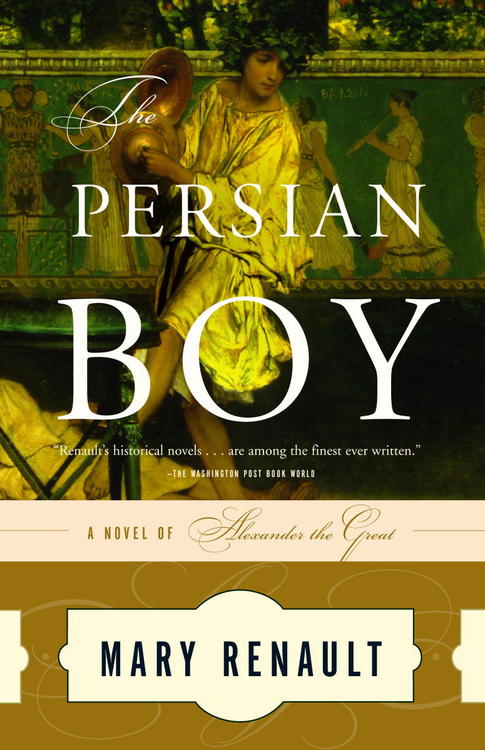
A brief introduction of two lesbian novelists, the British Mary Renault (1905-1983) and The French-Belgian Marguerite Yourcenar (1903-1987), by a contemporary writer Agnes Bushell, suggests that this is a distinct possibility.

According to Bushell, Renault and Yourcenar both created idealized homosexual characters, but they were all inevitably male. Strangely, they both seemed to despise their female characters, all of whom, says Bushell, "are either absent or loathsome."

Moreover, they go back in time to ancient Greek history and mythology to model their heroic gay male characters on.

In other words, their creative inspirations remarkably match those of gay male writers of their era, like Arthur Symons. 

It could be that to come out openly as a lesbian would've been risky for both women, and to champion lesbian characters would've got negative press or no press at all. Safer to exalt same sex male love than same sex female romance? 

The titles of some of the novels by Renault and Yourcenar indicate the presence of male personas. Here are two samples:


Sunday, January 20, 2013

From mountains to pit stops

Ennis and Jack meet and fall in passion with each other against the backdrop of majestic mountains in Wyoming as shown in the film Brokeback Mountain

The gay males in Yen Tan's new film, Pit Stop, have no nature to escape into to pursue their passion. They remain closeted and live straight lives. Or, I infer from the title, that, as they journey in their pickups, they make pit stops to make love.

The film is set in small town Texas, where, as Tan says elsewhere, there are gay males galore. They are mostly working class and married with children. 

Tan takes an objective look at the Texan attitude to male homosexuality. Unlike Brokeback, where Ennis suffers a brutal end and Jack is forced to pent up his emotions--he can't mourn the death of his lover openly, --Pit Stop reveals a surprisingly tolerant community.

Sunday, July 29, 2012

A modest proposal: avoid homosexuals


In 1729 Jonathan Swift composed a satirical essay in the Juvenalian vein. It was called A Modest Proposal for Preventing the Children of Poor People From Being a Burden on Their Parents or Country, and for Making Them Beneficial to the Publick.

Swift lashed out against the prevalent Irish policy that led to impoverishment, starvation and famine in the British colony of Ireland. But the lashing out was veiled in heavy sarcasm; cannibalism--a suggestion that the Irish eat their children so they didn't have to feed them--was the Swiftian solution to the problem of poverty in Ireland.

The video entitled The Homosexual Menace is in the Swiftian mode. An egghead of a viewer might just not get the satire and might literally take the video to be an attack on homosexuality.

I had thought that the Swiftian satire was dead. Good to know that it's alive and well.